The Mapam plans Revolutionary Guerrilla War for the Triumph of the Socialist ‘World of Tomorrow’ over Israeli Fascists
The plans of the Mapam, the Israeli communist-led ‘Socialist Zionist’ Party and Soviet spy front, was to (1) utilize its network of agents in the Israeli military and intelligence so to neutralize the Israeli state’s violent opposition to socialist revolution at home and socialist forces abroad, (2) utilize the democratic institutions of bourgeois-democracy for intelligence penetration into the ranks of the Israeli state apparatus so to reinforce the Mapam’s network of agents, (3) engage in mass work among proletarians, strengthen the kibbutzim, and stockpile the underground arms caches for the eventual overthrow of the Israeli state and the establishment of a People’s Democracy.
At the same time, the Mapam leaders believed that their plans for infiltration would be jeopardized in the event of a Jabotinskyite coup that would transition Israel from a pro-fascist Kautskyite social democracy (embodied by the Ben-Gurion gang) to a full-on Pinochet-type fascist military dictatorship. Furthermore, they believed that the IDF, via the Hashemite monarcho-fascist regimes of Jordan and Iraq, would partake in a fascist aggression against the USSR. To prepare for such unfavourable scenarios, the Mapam established underground arms caches and further wove its web of agents throughout the ranks of Israel’s military, intelligence, economic, and central leadership bodies; plans for an Israel-wide revolutionary guerrilla war were laid.
The History of the USSR & the Peoples’ Democracies
Chapter 16, Section 6 (C16S6)
Saed Teymuri
The Mapam leaders analyzed that the Ben-Gurion regime was plotting an alliance with the Irgun terrorists in order to transition Israel from a Kautskyite terrorist state to a fascist state more in line with Anglo-American interests and engaged in combat against the Soviet Union and the Peoples’ Democracies. Ze’ev Tzahor – a prominent aide to Ben-Gurion, researcher on Mapam and the biographer of Ya’akov Hazan – wrote:
The explanation for the role of the underground is derived from the assumption that Ben-Gurion promised the Western powers military assistance during the impending World War. To confirm this assumption, they analyze Ben-Gurion's leadership and ideological past, in order to determine its future trends. Thus, for example, it was determined that Ben-Gurion decided on the dissolution of the Palmach even before the establishment of the state. Ben-Gurion was compared to Jabotinsky – both only pretended to be fighters against the British while they were really 'Anglophiles'. Ben-Gurion, who had always admired the British, formed a conspiracy with them, based off of which he gave up the conquest of the land [and handed Israel to the Anglo-Americans]. Its goal is to allow Britain to control Jordan and get through it and through Iraq to the soft underbelly of the Soviet Union. It was further determined that there is a written promise by Ben-Gurion to establish British and American military bases, which will turn the State of Israel into a logistical base of attack against the Soviet Union. The discussion included tenure, that Ben-Gurion wants to harm the kibbutz movement and strike a wedge inside the Mapam. A man devoid of such moral inhibitions could forge an alliance with the fascist Right led by Begin and turn the country into an arm of the West in the Middle East. (Hazan: Movement of Life, Yad Izhak Ben-Zvi Institute, Ze’ev Tzahor, 1997, p. 198) (IMG)
The Mapam, which already had a powerful intelligence network in the command of the Israeli armed forces, began to prepare for a ‘stay-behind’ network that would wage armed resistance against the fascist regime of Israel should Israel transition from a Kautskyite state to a fascist state. The armed resistance was to take the form probably of a democratic restorationist counter-coup by the communist generals against the fascist coup, or Israel-wide guerrilla resistance against the regime:
In 1950, Mapam's secret cells operated in the security service, the military administration, the Ministry of Defense and the army. It must be said in advance that the matter of the Mapam Underground in the security system is extremely sensitive. Documentation about it is limited, and most of it is not available to the researcher. (…). Despite the caution and destruction of the evidence, records remain that deal with explaining the need to establish secret cells within the military. They mention two completely different missions: one, which was apparently outlined by Hazan, assumes the possibility that the Right, led by Menachem Begin, will take over the country by force and establish a fascist regime. In such a case, the cells are meant to gather early information to thwart the takeover, or to prepare for an underground struggle, if what has been defined as a 'fascist right-wing plot' succeeds. A completely different task is the one outlined apparently by Sneh, according to which, the cells must prepare for the possibility of war between the 'War-Mongering' West and the socialist 'World of Tomorrow'. An unsigned summary of a discussion in one of the cells indicates a revolutionary underground that will operate in the IDF and actively participate in the "imminent World War.". (Hazan: Movement of Life, Yad Izhak Ben-Zvi Institute, Ze’ev Tzahor, 1997, pp. 197-198) (IMG)
It is of interest to compare the main theme of the Mapam’s internal discussions with Yitzhak Rabin’s last speech in 1995. The Mapam harbored the thesis that a CIA-backed coup would transition Israel from a bourgeois-democracy into a Jabotinskyite fascist state. Comparably, Rabin, in his last speech, warned that right-wing extremist violence was posing a serious threat to the democratic tendency in Israel. Rabin said: “Violence is undermining the very foundations of Israeli democracy. It must be condemned, denounced and isolated. This is not the way of the State of Israel [ideally]. Controversies may arise in a democracy but the decision must be reached through democratic elections as happened in 1992 when we were given the mandate to do what we are doing and to continue to do so.” Rabin could see what was coming. Within 24 hours, as Rabin predicted, the CIA and its Shin Bet mercenaries initiated the hybrid coup in Israel, first killing Israel’s elected Prime Minister and then going on a hunt to purge off the Mapam agents in the high ranks of the security apparatus of Israel. A fascist state, in the sense of a Pinochet-type junta, was not established, but the fascist forces did gain strength. The Kautskyite group of Shimon Peres then intentionally lost the election and handed the government over to Netanyahu, back then a Jabotinskyite puppet of the CIA’s most favored man in Israel at the time, Ariel Sharon.
Related 1:
Related 2:
Anyways, let us return to the 1950s. The plan outlined by Moshe Sneh was that the Mapam operatives in the high ranks of the IDF would utilize their positions to stab the fascist efforts in the back and to sabotage the Israeli regime’s war efforts against the USSR and its allies. It is worth reminding that the Mapam-affiliated generals in the IDF had already engaged in such activities, the most remarkable of which was the Altalena Affair during Israel’s war against Soviet allies Egypt, Syria, and Lebanon.
Yet, not only was the Mapam to have such cadres in the IDF for the purpose of backstabbing the IDF’s war on the Soviet Union, the Mapam leaders called on their comrades to prepare for the stay-behind guerrilla warfare against the Ben-Gurion regime on the side of the Red Army and its allies in the Middle East:
In 1949, Aharon Cohen, one of the prominent ideologues of the Kibbutz HaArtzi, demanded that they prepare in advance and prepare tools to help the Red Army, which was preparing to occupy the Middle East. The feature leading up to the Great War, which would also be the fulfillment of the 'Class War', spread in various and broad directions, including military preparations in advance against the possibility that Ben-Gurion, in alliance with the Right, would help the enemies of the Soviet Union. Against this background, Hazan dramatically announced from the Knesset podium: ‘Here in Eretz Yisrael there lives - as long as we live - a force that will in its lifetime not allow our country to serve as a launching pad for war against the Soviet Union.’ (Hazan: Movement of Life, Yad Izhak Ben-Zvi Institute, Ze’ev Tzahor, 1997, p. 199) (IMG)
(…). The Mapam had a Military Committee which in turn had an internal committee led by Baruch Rabinov, the Mapam’s security chief:
Mapam's official Military Committee was composed of impressive names: Yitzhak Sadeh, Yisrael Bar, Eliyahu Cohen Ben-Hur, Yigal Allon, Moshe Carmel, Shimon Avidan. The Committee was concentrated on Baruch Rabinov. His choice stemmed from his being less known to the public, and mainly due to his absolute loyalty to the movement and its leaders. It was agreed by the recognized security personnel that most of the Committee’s action would be done without them, and perhaps even without their knowledge. The lists in our possession show that the plenum of the Committee was seldom convened. The place of the official Security Committee was taken by an internal committee. We know that it had five members, headed by Rabinov, and that among the official Committee only Yisrael Bar was included. (Hazan: Movement of Life, Yad Izhak Ben-Zvi Institute, Ze’ev Tzahor, 1997, p. 201) (IMG)
(…).
Some of the heroes of the War of Independence, who felt that they had fallen into disgrace from the Army, turned to the [Mapam] Party's leadership and offered their services. It was all for the purpose of making the move to prepare a revolutionary alternative, relying upon on the senior IDF officers who were forced to retire from the very body they had set up and headed to war. Their previous status in the military allowed them to expand the base and secretly, of course, actively serve as officers.
(…). Another source that indicates the activity of the secret cells is a document file by Baruch Rabinov, who was then head of the Security Committee of the Kibbutz Haartzi.
Baruch Rabinov, a member of Beit Alfa, one of the leaders of the Haganah and one of the senior members of the Ministry of Defense at the time of its establishment, is the one who links the issue to Hazan. Rabinov was in the first circle of Hazan's associates, and in matters of security he was his secret man. The relationship between them went beyond the loyalty of the movement's activist to its leader, and developed into a personal and family friendship. In the vicinity of the Palmach Convention [against Ben-Gurion faction’s dismantlement of the Palmach], Rabinov was also "fired" from the defense establishment. After many years of activity in senior positions in the security fields in the locality, Beit Alfa expected him to return home. Hazan turned to his kibbutz and asked Rabinov to approve the continuation of the activity. He was called to coordinate the Party's Security Committee. Hazan did not have to ask for much; the members hinted that there were compelling reasons forcing them to give up the principle of rotation [of positions] in this case. The position assigned to Rabinov was not an ordinary movement activity and it [was] advisable not to [expose it to too many members or] talk about it much.
(Hazan: Movement of Life, Yad Izhak Ben-Zvi Institute, Ze’ev Tzahor, 1997, p. 197) (IMG)
(…). The activities of the Mapam’s Military Committee were pervasive and were concerned with all aspects of military operations. Underground weapons caches were to be set up by the Mapam for the purpose of an Israeli revolutionary war against the Mapai-Irgun regime for tackling the scenario of a World War or a transition to fascist statehood. At least one large transmitter was also set up. Tens of high-ranking IDF officials worked for the Mapam and plans were made regarding the promotions of the generals, the lobbying and the deployment of agents into key positions in the command. Referring to the activities of the Mapam’s Military Committee and the latter’s internal committee, Tzahor wrote:
It is also possible to learn from the remaining records that the political authority with which they consulted was Hazan. Ran Golan, from Mishmar HaEmek, who compiled lists that upload a kind of group photo of the kibbutz veterans, to explain how from time to time, in the late hours of the night, a senior officer is seen climbing the path leading to Hazan's room. In the secret room in the kibbutz, Ran Golan describes, they talk about issues that are not sensitive to them, that can not be talked about in the Knesset, certainly not over the phone. From time to time, wider meetings were held, two or three officers, Baruch Rabinov and Hazan. Some of the meetings of the internal, limited Committee were held in Mishmar HaEmek. The official, expanding Committee was not involved in the operative issues. It set out the principles of operation, although sometimes operational issues were brought before it. Thus, for example, at its meeting on May 9, 1950, it approved a comprehensive emergency preparedness. A torn page, which is part of the summary, remains in our hands. It can be read as follows:
1. Each farm must carefully separate the weapon that was invented for it by the Haganah and the IDF, and it is in the registration of the IDF armament service, and the weapon that was purchased by the farm directly and is not in the above [IDF/Haganah] registration.
2. The second type of weapon, which is not in the IDF records, must be stored in a special hiding place in accordance with the cache arrangements, with all the provisions of the secrets contained therein…. The subject matter and the location of the hiding place cannot be known to more than three people.
A ‘large transmitter’ was hidden in one of the kibbutzim.
At other meetings, information was provided on the activities of the 'party cells in each unit', on a plan to return one hundred officers to the regular army at the party's initiative, and on 'pushing young recruits into positions'. No less than ninety officers in the regular army worked in the secret activities of Mapam cells in the IDF. The lists were marked as top secret. Most were destroyed of course. The information passed on to the members was general, usually without names. The information passed on to the members was general, usually without names. Baruch Rabinov allowed himself to be praised in an anonymous description of the roles held by the secret partners:
1 Commander-in-Chief, 2 Chiefs of Staff, 2 Command Operation Officers, 3 Brigades, 2 Lieutenants, 1 District Commander, 5 Deputy District Commanders, 1 Corps Commander, 2 senior Navy officers, 6 in the Air Force, 7-10 in the General Staff, 6 instructors in the battalion commander course, 20 trainees [in a battalion commander course?] [previous square brackets by Tzahor].
Of the names mentioned in the various lists, 11 are expected to reach the rank of Alufs and above.
(Hazan: Movement of Life, Yad Izhak Ben-Zvi Institute, Ze’ev Tzahor, 1997, pp. 199-200) (IMG)
Note that the term ‘Aluf’ literally means ‘Hero’, is rooted in the word ‘Thousand’, and can be regarded as an Israeli equivalent of Major-General. The IDF Chiefs of Staff as well as some Mossad Directors were ranked as ‘Aluf’. (…). The Mapam also had agents in of the ranks of the right-wing parties:
In 1950, Mapam's secret cells operated in the security service, the military administration, the Ministry of Defense and the army. (…). Some of the cell members later made an impressive security career. Of those, there were generals, ambassadors and Members of the Knesset who were not necessarily [officially affiliated with the] Mapam. One of them was a minister in a right-wing party. This is based on several sources. (Hazan: Movement of Life, Yad Izhak Ben-Zvi Institute, Ze’ev Tzahor, 1997, p. 197) (IMG)
The secret weapons caches for an armed revolt were to be stored in least 50 kibbutzim:
The latter include testimonies from members of kibbutzim, who were asked to prepare a weapons depot parallel to the official warehouse, recognized and registered by the authorities. According to them, a secret weapons depot has been prepared in at least fifty kibbutzim. (Hazan: Movement of Life, Yad Izhak Ben-Zvi Institute, Ze’ev Tzahor, 1997, p. 197) (IMG)
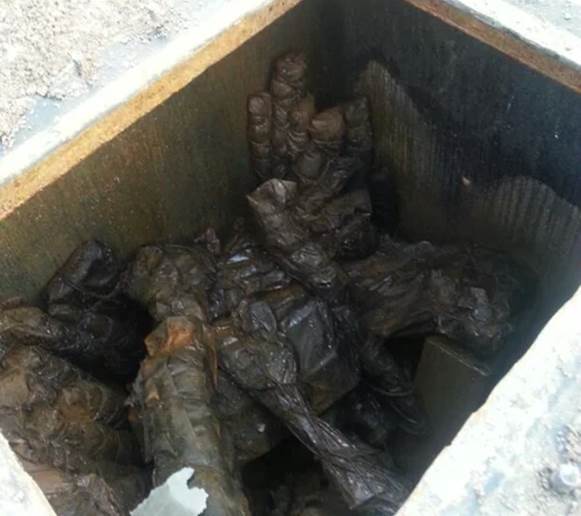
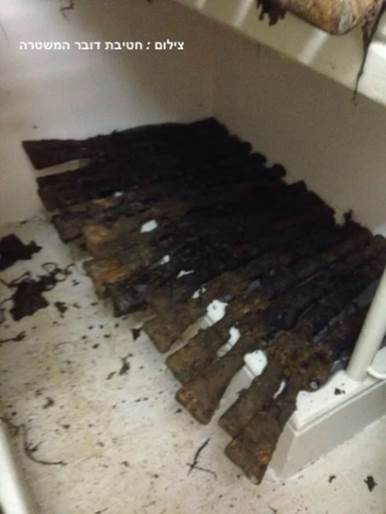
So securely hidden were some of these weapons caches that they are still in the process of being discovered. An example is a weapons cache that was discovered in 2014. In the Kibbutz Mesilot, affiliated with the Hashomer Hatzair, there existed a hiding place for the weapons that was believed to have been established after the1948 War – that is after March 1949, most likely in 1950. The Ha’aretz reported:
An old weapons cache containing dozens of rifles was uncovered at Kibbutz Mesilot in the Beit She'an Valley Monday, during excavation for the construction of a new classroom in the local school.
The rifles were found wrapped up in wax paper, outside the kibbutz fence. Kibbutz members said the police had been informed and a police sapper would be dealing with the find.
The man who hid the rifles, Ephraim Neubart, passed away and no one knows when he hid them. Neubart’s son, Gadi, told Haaretz that no one knew about the cache except two other members, who used to be the kibbutz metal workers.
“We knew more or less where the ‘slik’ was, Neubart said, using the slang word for such weapons caches, best known for the role they played in the 1948 War of Independence. But Neubart’s assumption about the date of the cache is surprising – he believes his father and his confidants hid the weapons after the state was established, and not during the war.
“My father took his secret to the grave with him and was never willing to reveal where the ‘slik’ was,” he said.
(‘British Mandate-era Arms Cache Found Under Israeli Kibbutz’, Ha’aretz, Eli Ashkenazi, January 28, 2014) (IMG)
|
|
A photo of one of the Mapam arms caches in Israel. The communist loyalist members of the Mapam decided to take the secret of such arms caches with them to the grave and only six decades later were these arms caches discovered. Source of Image: (‘British Mandate-era Arms Cache Found Under Israeli Kibbutz’, Ha’aretz, Eli Ashkenazi, January 28, 2014. Credit for photos: Israel Police Spokesperson). (IMG)
Some of these weapons may have been stolen from the IDF itself:
It is possible that in rare cases, weapons were taken from IDF warehouses and stored in hiding places; it is conceivable that maps and information were collected, and that the early stages of the practical preparations for the outbreak of world war also began. The only operative plans dealt with a response to the possibility that the Revisionist [i.e. Jabotinskyite] Right would take power by force over the state. (Hazan: Movement of Life, Yad Izhak Ben-Zvi Institute, Ze’ev Tzahor, 1997, pp. 199-201) (IMG)
The cells established by the Mapam Military Committee propagated among the army officers, educating them about communist ideas and/or Hashomer Hatzair ‘Socialist Zionist’ ideas, and instructed them on methods of sabotage:
Little is known about cell activity. From the remaining descriptions one can learn about the influence of the literature of the Russian Revolution on the way the cells were constructed and the method of their operation. The cells were secluded, gathering in secret places outside the base, usually in a nearby kibbutz or in the private home of one of their friends. The cell was egalitarian, with no regard for ranks, and meetings were held without uniforms. They were attended by soldiers in regular service and permanent officers. The management of the cell was entrusted to a secretary, elected by the cell. Sometimes the military rank of the cell secretary was lower than that of the other members. The main function of the cell was to secretly infuse the spirit of the revolution into the tents of the army, and to wait for the day of command. In the cell the unit problems were also discussed, including promotions and roles.
Recruitment to the cell is done in the best underground tradition. A man who was then a cadet in an officers' course says that one day he was secretly approached by a cadet from his friends and invited him to a secret meeting of cadets from his course in a private apartment in Netanya. Yisrael Bar attended the meeting, which convinced them to participate in the cell. The meetings were held once every two weeks, on an evening assigned to After Duty. There were guest lectures, and mostly internal discussions. Thus, for example, the question was discussed, what should the soldier do if he is required to unload a weapon ship intended for the army in the port of Haifa - to attach the weapon to the sea, or whether the needs of the army require him to receive weapons from any source, even American. Apparently, the activity in the cells did not deviate from their social formation, and the ideological and theoretical discussion was emphasized in it.
(Hazan: Movement of Life, Yad Izhak Ben-Zvi Institute, Ze’ev Tzahor, 1997, pp. 199-201) (IMG)
In the Shin Bet and the Mossad, Mapamite intelligence networks were woven:
The expansion of the secret cell network could have led to their exposure. Indeed, the bustling activity did not go unnoticed by Isser Harel, especially the one that was woven in his immediate environment. He himself [unintentionally/unwillingly] added to the security service a concentrated group of about thirty Palmach men, led by Gershon Rabinowitz of Ruhama. In the television program "Such a Life" dedicated to the cantor, Isser Harel told about "Mapam's underground, an underground within government ministries, within my organization, within the security service." (Hazan: Movement of Life, Yad Izhak Ben-Zvi Institute, Ze’ev Tzahor, 1997, pp. 199-201) (IMG)
Ben-Gurion himself had expressed serious concern about this matter. In a conversation with US intelligence representative in Israel, Prime Minister Ben-Gurion remarked:
"… in [the] event world conflict … Mapam could possibly cause embarrassment….”. (784A.13/7-3150: Telegram, The Ambassador in Israel (McDonald) to the Secretary of State, Top Secret, Priority, Tel Aviv, July 31, 1950. In: Foreign Relations of the United States, Vol. 5, United States Department of State, pp. 960-961. Note: many US diplomatic documents are written deliberately in an abbreviated or note form as means of making the document brief.) (IMG)
According to Tzahor, citing the testimonies of people he contacted, Moshe Sneh had established a network of cells made up of handpicked communist and progressive loyalists that would have taken secrets with them to the grave rather than reveal their weapons caches:
Later testimonies relate to the activity that took place in the cells of another leader, Moshe Sneh. Hazan treated with suspicion the brilliant Doctor, who had just replaced stormy Zionist activism with equally stormy revolutionary activism. Sneh's attempt to bypass the 'historical leadership' and build a direct channel of dialogue with the young people of the 'national kibbutz' by virtue of his charisma provoked unrest. Sneh, who wanted to cultivate his relations with the young people of the 'Kibbutz HaArtzi' without provoking the anger of the leadership, preferred that his connection to the cells not be known to Hazan. Sneh’s connection to the cells was thus limited to a small and determined part of them, and kept a secret within a secret. In the distance of time it is not possible to determine with certainty the method of activity of the two in the cells and their personal part in their management. There is room for speculation, whose role was limited to shaping the ideological framework of the organization. (Hazan: Movement of Life, Yad Izhak Ben-Zvi Institute, Ze’ev Tzahor, 1997, p. 198) (IMG)
As can be seen, there existed a powerful communist resistance network in Israel. Such a communist resistance intelligence network was able to grow and become a force to be reckoned with, lest we forget, thanks first and foremost to the strong presence of the kibbutzim in the Israeli economy in the alliance with the proletariat as well as the high soft power influence of socialism among the Ashkenazim. The Palmach arose out of the kibbutzim although it was commanded by the Achdut Haavoda operatives based in the urban proletarians. The kibbutzim and the proletarians frequently fought for expelling the United States from Israel.
To be continued….
Click here for Screenshots of Source Documents
_________________________________
Join Mailing List by
emailing sovinform.tech@gmail.com
Place the following phrase in your
email subject/title ‘Join Mailing List’.
No further comment necessary.
_________________________________
Follow Sovinform on
_________________________________
The book The History of the USSR & the Peoples’ Democracies
is now available for easy print.
_________________________________
Photo credits: Super-imposition of the Red Star over the Lilien's drawing of Tzion. https://en.wikipedia.org/wiki/Zion#/media/File:Lieder_des_Ghetto_11.jpg